Our Favorite Quartz Watches

We love quartz watches at Worn & Wound for a huge variety of reasons. Very often, a quartz watch is someone’s first watch, the watch that sets them down a path of enthusiasm and collecting that so many of us are familiar with. Quartz watches are often (but not always) an affordable alternative to a mechanical watch that doesn’t need to sacrifice anything in terms of design. Also, the technology is just incredibly cool, and so many great watchmaking minds have contributed to refining it and making it even better over the years.
We decided to ask our editorial team members to write a little bit about their favorite quartz watches. Some of these are watches they own personally, some are historic, and others are just fun examples of watches that might not make as much sense with a mechanical movement.
Be sure to let us know what your favorite quartz watch is in the comments below.
Zach Weiss – Seiko Sportura SLQ009 Kinetic Chronograph
Well, this is an easy one for me, as I happen to have it in my collection: the Seiko Sportura SLQ009 Kinetic Chronograph. Where to even begin with this one… I’ll start by explaining why I like it. Long before I was properly afflicted with the watch-collecting-itis, I was simply a teenager in NYC with an appreciation for watches. My dad and I would occasionally go to the Tourneau TimeMachine on 57th Street for fun on the weekends, and for a time, they had a Seiko Kinetic Chronograph on display. It had, as I recall, a special vitrine to show off its unique looks.
Exotic in every way, the dial, deconstructed, is turned into four separate “dials,” each with its own crystal. At the time, I knew this was special, though not how uncommon it really was, or how it suggested a complicated movement. I just liked it. But, it didn’t stop with the dial. The whole thing was bizarre and sci-fi, reminding me of some of my favorite films at the time, such as Akira and Aliens, so I was taken with it. Interestingly enough, my favorite watch on display those days was the Vianney Halter Antiqua perpetual calendar. They share a bit of quirky DNA, though I don’t expect the Antiqua to find its way into my collection.
Fast forward to 2023, and it dawned on me that I was an adult and could buy what I wanted. Although it wasn’t exactly a popular watch amongst enthusiasts, especially since Seiko Kinetic watches are often overlooked, it somehow held a place in my mind. Admittedly, I wasn’t sure what exact reference it was; we are talking about memories from 25 years ago. However, upon doing some research, the SLQ009 just looked right. Other versions are similar, but since the 009 is entirely made of titanium, it won out. I dug a little and found one in decent enough condition for a tolerable price.
The SLQ009 and its siblings are truly special watches that must have been an attempt to flex Seiko’s Kinetic technology. For those unaware of Kinetics, they were quartz watches with rotors that, like automatics, would charge via body motion. So, no battery. The chronographs were powered by the 9T82 caliber, which I’ve read described as “if Grand Seiko had made a Kinetic.” Hand-decorated and assembled, they feature 38-jewels, and a mechanical gear train that runs the chronograph functions, which includes a 1/10th second counter, a 60-second counter, and a combined 30-minute/12-hour counter.

They are notoriously complex movements, and thus can only be serviced in Japan by Seiko. The major downside to these watches is that, although they had no battery, they featured capacitors embedded inside. Those capacitors don’t last forever, and given that these watches are all at least 20 years old, they are likely already not functioning correctly. So, if you happen to be looking for one, try to get one that says it has had the capacitor replaced; otherwise, your watch will need to be sent to Japan. Mine, sadly, needs to make such a journey, but at least I can currently admire its design, which I do, often.
Alec Dent – TAG Heuer Aquaracer Solargraph “Sundowner”
I think every watch enthusiast goes through a phase where they look down on quartz movements. Tradition, craftsmanship, prestige, yada yada yada. But hopefully that phase doesn’t last too long, because there are a lot of great quartz watches out there it’d be a shame to miss out on.
Take the Aquaracer Solargraph that TAG Heuer made in collaboration with Time & Tide last year, AKA the Sundowner. With a sandblasted titanium case and rose-gold accents — the indices are rose-gold plated, while the bezel numerals are just rose-gold colored — and a horizontal-striped black dial, the Sundowner is the most beautiful iteration of the Aquaracer that TAG Heuer has ever put out, and one of the most beautiful sports watches I’ve ever seen. Every few days I scroll around the internet trying to see if one of the 250 limited edition pieces has hit the secondary market yet. (Alas, in vain so far.)

But the watch is more than just an attractive mix of ruggedness and elegance. The Time & Tide crew wanted to make the perfect adventuring watch and landed on a quartz movement for all the reasons quartz watches shouldn’t be overlooked: the movement is far more precise than a mechanical movement, never has to be reset, and isn’t susceptible to magnetism or getting banged around like mechanical movements. With that aforementioned titanium case and 200m of water resistance, this is a tough timepiece. Sure, there are tradeoffs — quartz movements lack a certain distinct mechanical charm. But everything in life has tradeoffs.
Nathan Schultz – Autodromo Group C
Many enthusiasts, myself included, were drawn to this hobby by a fascination with complex spring powered movements that, despite their fragility and sometimes questionable accuracy, are too undeniably romantic not to love. There is a common misconception often touted on forums that this appreciation clouds our collective ability to see quartz movements as anything more than a budget-friendly alternative to their mechanical counterparts. And sure, many of us required an ah ha moment to overcome quartz snobbery, but the more I connect with seasoned collectors outside forums, the more I realize we aren’t nearly as quartz averse as online sentiment may suggest. As someone that actively seeks out quartz watches and has happily owned many from the larger brands, nothing makes me feel more seen as an enthusiast than a fan-favorite independent brand offering a battery powered watch. And while I’ve recently enjoyed seeing these pop up with welcome frequency, one watch in particular stands out as a pioneer that tested the waters before they were safe: The Autodromo Group C.
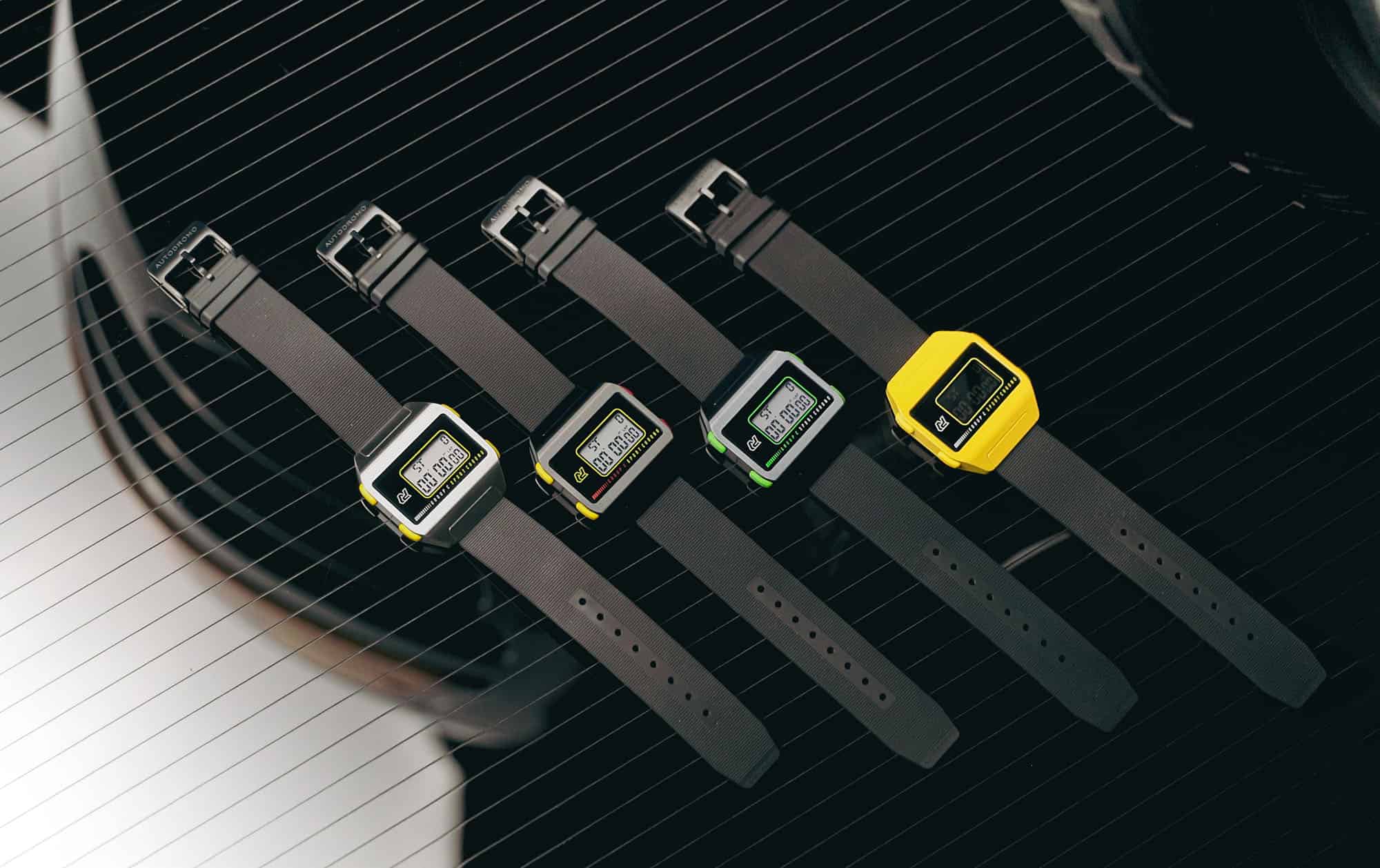
I find myself drawn to this watch for two reasons: First, what’s not to like about a highly functional and wildly comfortable 36mm watch that celebrates the intersection between cars and watches for under $500? You don’t need to be a gear-head (I’m not) to be captivated by the lovably colorful slabbed case that surrounds the no nonsense digital display of the Group C. Reason number two and arguably more important than the design, the early 2023 release of the Group C marked a moment when an enthusiast brand took a big swing by ditching those ubiquitous third party automatic movements to embrace a somewhat shunned technology, doing so with a notable intentionality that showcased quartz rather than simply utilizing it. Like any other unexpected watch, the online commentary in the wake of the release was predictably divided. Some collectors were impressed by the combination of color and technology, while a louder segment grumbled about the price and made jokes about overpriced Casios, arguments that overlook that all third party movements (even our beloved NH35s and Miyota 9015s) are mass produced and are often not the most expensive component of a watch, and that a small-batch watch with a coated stainless steel case and a sapphire crystal will of course be more expensive than the $15 resin watch at Target. The Group C was far from the first quartz microbrand watch, but it felt like a turning point for an inside baseball brand to take the stance that quartz was cool and belonged in a watch that costs more than a hamburger.
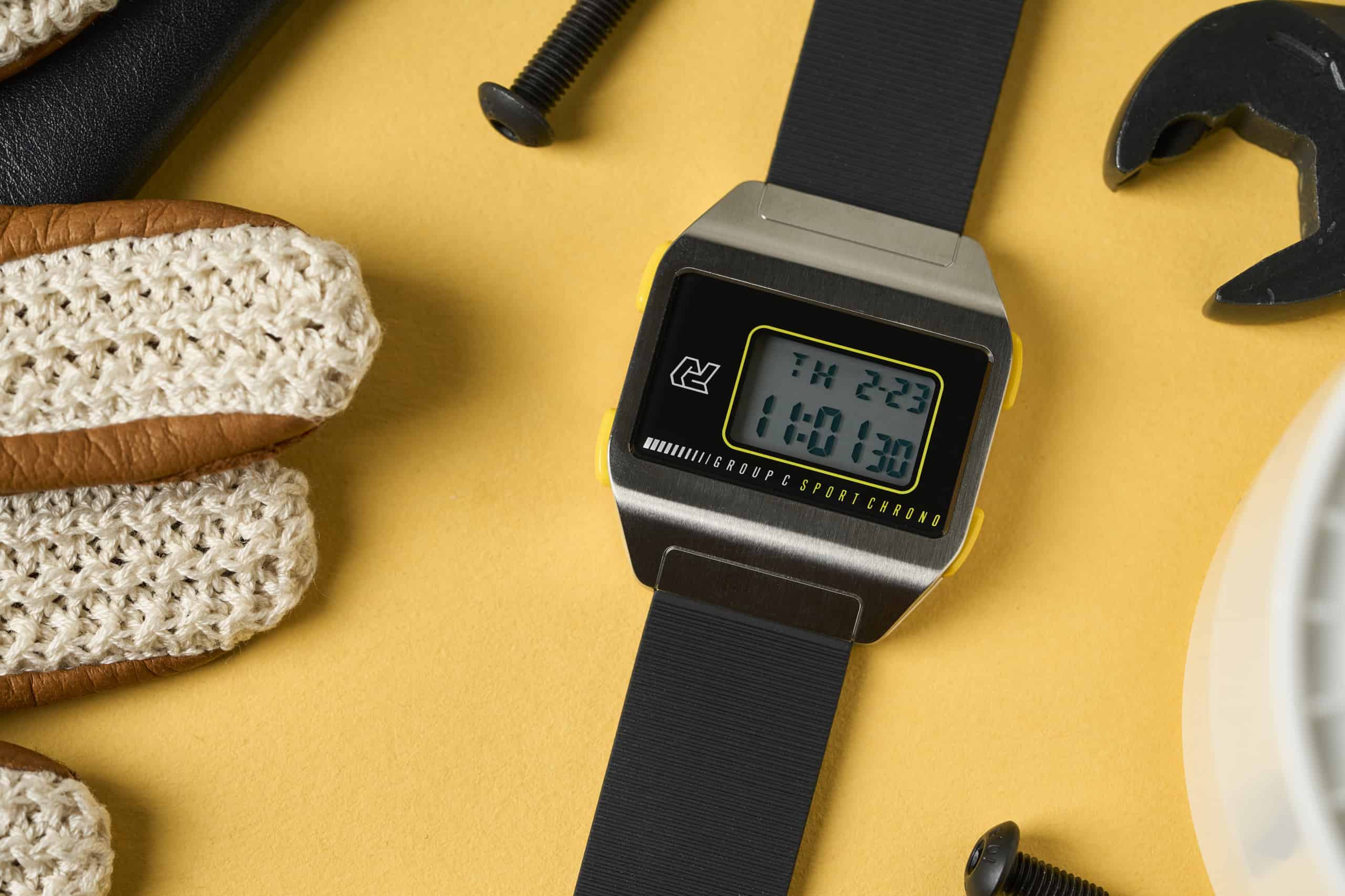
Even on forums where the loudest voices don’t necessarily represent enthusiast sentiment, I can’t help but think the Group C would have received a more unanimously positive welcome were it released today. This is evidenced by watches that have followed in its footsteps such as the (now sold out) high accuracy quartz Erebus Ascent, the custom LED module RZE UTD-8000 (the brand’s fastest selling watch) or the (previously sold out) HZ.01 from Hz watches which proudly displays 32,768 HZ on the dial. Noticing a trend? With a clear track record of voting for creative applications of quartz with our wallets, the enthusiast crowd has proven time and time again that the water Autodromo bravely waded into is warm, and I’d be a happy collector if more microbrands dove in.
Christoph McNeill – Bulova Computron
In general, I am not a fan of quartz watches, as I greatly prefer the intricate nature of mechanical movements. When you add a battery to a watch, it just kills the beauty of it for me. That said, I do really like vintage LED and LCD watches. The advancements in technology that they represented at the time were really quite amazing and interesting. Plus they just look cool. Retro is in, and some watch companies have been re-issuing “heritage” editions of vintage digital watches, including Bulova’s remake of the classic Computron LED watch.

The 1970’s original is a highly sought-after classic that isn’t quite rare, but isn’t all that common to find in good cosmetic and/or working condition. The watch is a rectangular wedge, with the LED readout on the side of your wrist towards your eyes. The original came in a yellow gold fill case, and there were some examples in stainless steel, although the steel ones are indeed quite rare.
In 2019, Bulova remade the Computron as one of their “heritage” editions (they’ve remade several killer divers as well). For this release they made three different variations, original gold with red LED, a PVD black with red LED and a black rubber strap, and a stainless steel version with a striking blue LED. I immediately went out and picked up the steel and blue version – I had to have one! As a quartz watch, it’s an easy grab and go choice since I don’t have to set it. I love wearing it, it has the coolest retro look, and it definitely draws attention every time I strap it on.

I remember as a kid wearing an LED watch, and I loved having to push the little button to light up the screen to tell the time, and there is something so satisfying in doing the same thing today. These were around $300 when they came out ($400 for the gold plate version). I’m not sure if Bulova still makes them, but I’ve seen them on Amazon for around $200 recently. Can’t beat that for an easy to use, retro-cool quartz watch!
Brett Braley – the “Apple Watch”
Recently, I updated my iPad and iPhone in the same week, so I’ve been on a bit of an Apple kick. By no means would I say I’m a Steve Jobs fanboy, but I’m embarrassingly loyal to brands. Because of this, I found myself down a rabbit hole of vintage Apple promotion products and one that I’ve put on my eBay watchlist is the 1995 promotional Apple wristwatch. Debuted to celebrate the MacOS 7.5, this watch was given out to customers who purchased the upgrade and was never sold in stores, making it a fairly rare (and definitely dated) piece of Apple’s nascent marketing.

While this Apple watch isn’t going to track my daily steps or notify me of a WhatsApp message, it’s this absurd relic of the 90’s, with its bold blue bezel, rainbow Apple logo, and geometric hands (the seconds hand is inexplicably shaped like a yellow sperm). Why I like this watch is that it’s very much pre-minimalism, which we all know Apple for today, and sits more comfortably in the design language of something like Saved by the Bell, making it both a piece of nostalgic eye candy and perhaps a fun little talking point at parties. With prices ranging from $300-500, it’s not something I’m going to hit “add to cart” on just yet, but hey, at least I don’t have to worry about tariffs affecting the price of this Apple watch
Griffin Bartsch – Breitling Emergency (Yellow Gold)
Did you know that Breitling made a solid 18k yellow gold Emergency? Because up until I saw one in person for the first time, I certainly didn’t. Beyond its role in one of my all-time favorite episodes of Top Gear, the Emergency was never a watch I thought much about. But in yellow gold? In yellow gold, the Breitling Emergency has become a watch I covet.

This is a watch that’s just plain weird, and one that shouldn’t exist. Its very description defies convention and sensibility. The Emergency is a watch meant to survive, to bring you back from the very edge of the world, and yet it feels more at home in yellow gold than just about any other sports watch I’ve ever encountered. Put simply, the thing is a behemoth. At 43mm with a lot of crowns and other case protrusions (including the housings for the antennae) it’s a hefty chunk of gold on your wrist. But it’s more wearable than the yellow gold Deepsea Rolex introduced last year, and it’s a hell of a lot cheaper, while still conveying the same over-spec’d thrill in a delightfully yellow package.
Is this a practical watch for anyone? Probably not, unless you’re anticipating your super-yacht getting shipwrecked somewhere it shouldn’t, but that doesn’t mean this thing isn’t cool as hell, and sometimes that’s enough.
Zach Kazan – Seiko Astron 35SQ
I admit that I don’t find myself wearing quartz watches all that often in my daily life. Like some of my colleagues have articulated here, there’s something about the charm and romance of a mechanical movement that draws me into this hobby and it’s become ingrained as a primary focus. But I’m still fascinated by the development of quartz technology, and I personally think that the early days of quartz wristwatches, the late 1960s are and early 1970s, are some of the most fascinating from a purely historical perspective. This was a moment in watch history that changed the course of the entire industry for decades. You could argue (in fact, I would argue) that we are still feeling the impact of those first quartz watches today.
So my favorite quartz watch has to be the first: the Seiko Astron. Released on Christmas Day, 1969, it’s simply one of the most consequential watches ever produced. It was positioned as a luxury object, and was crafted in a beautiful solid gold cushion case with a finely textured finish. The retail price at the time was ¥450,000, which at today’s exchange rate is a little over $3,000, but equal to around $26,000 in today’s money.
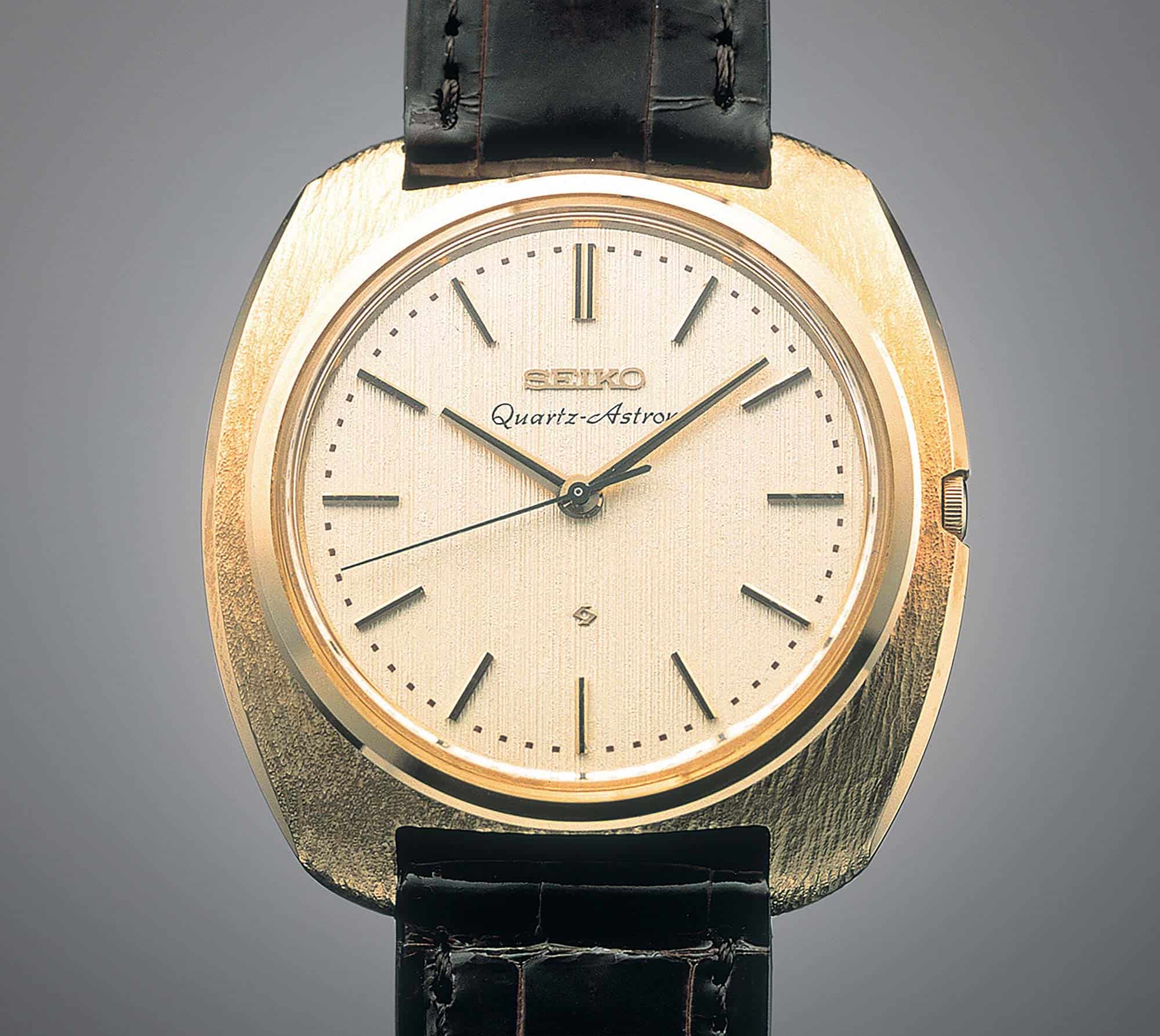
The Astron was a shot across the bow of the Swiss watchmaking industry. A cadre of Swiss brands had been working together to produce the Beta 21 movement, which would soon find its way into equally luxurious watches from Rolex, Patek Philippe, Omega, and others. But the Beta 21, while very accurate, was big, inefficient, and expensive to produce. The Japanese had an edge in quartz technology that in those early days that they’ve never really given up, and the Astron was at the bleeding edge of what most of the world now describes as the “Quartz Crisis,” but what is seen in Japan as the “Quartz Revolution.” The next two decades would see quartz trickle down to become the ubiquitous time keeping technology, while the traditional mechanical watch industry nearly fell apart and eventually reinvented itself. Step back and you realize the inherent, worldwide drama of the watch industry during these years – it’s actually surprising there hasn’t been an HBO miniseries or something similar devoted to it.
Meg Tocci – Hamilton Ventura
The 1950s were a wild time in the United States. The war was over, productivity was high, and the spirit of innovation swept over the nation like a tidal wave. While many associate the 50s with trailblazing TV programs like I Love Lucy, or vintage cars like the Ford Thunderbird and Chevy Bel Air, the decade was filled with booms in technological progress that extended to the watch world. And while it isn’t quartz, Hamilton’s 1957 release of the Ventura – the world’s first electric watch – helped change the course of horological history.
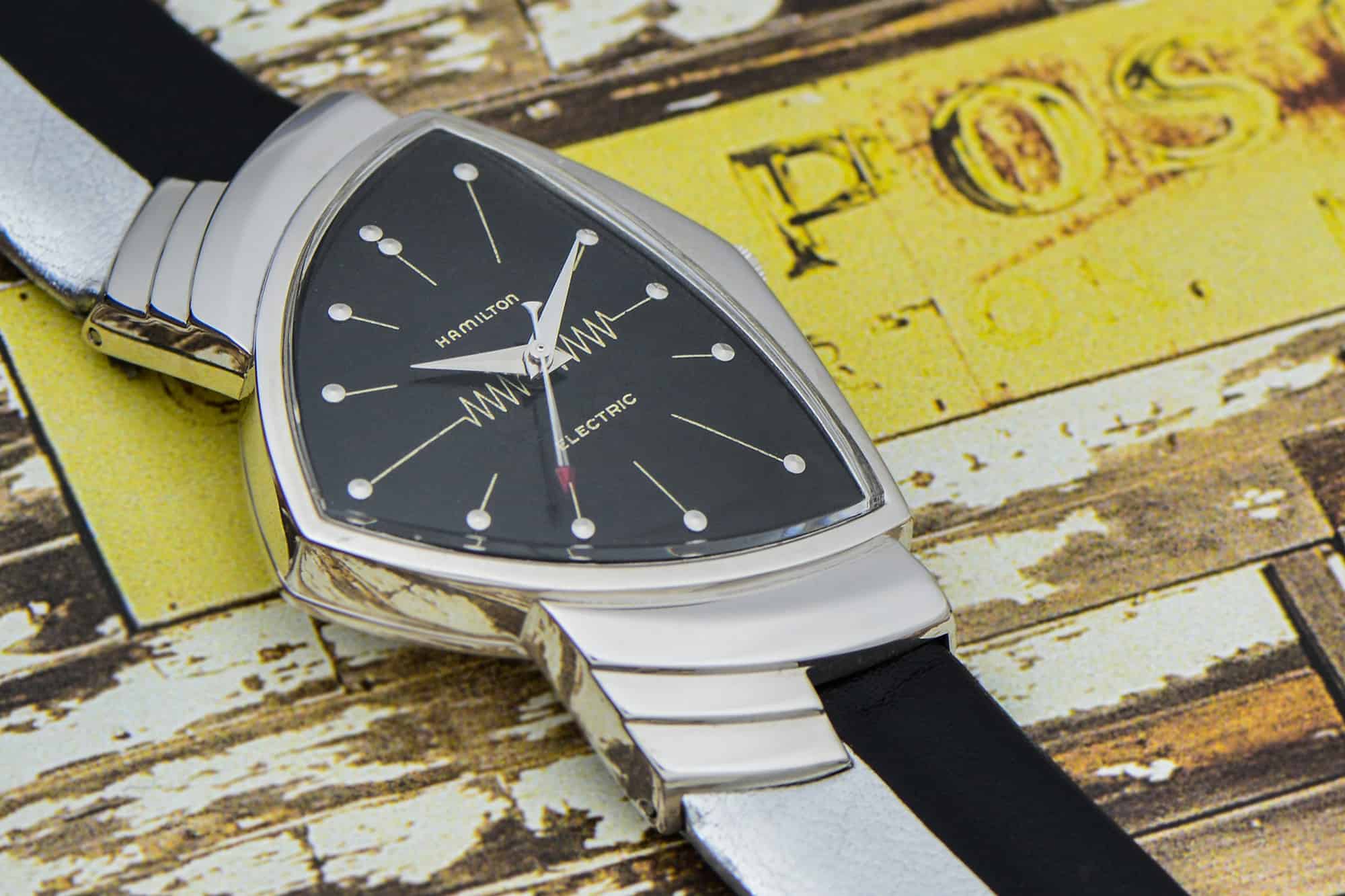
The Hamilton Ventura was a known celebrity favorite in the late 1950s and early 60s. Though the most famous wrist to don this watch belonged to Elvis Presley – who wore it in his 1961 film Blue Hawaii – it was also a favorite of Rod Serling, the host of the cult classic TV show, The Twilight Zone. Hamilton and rival American brand Elgin were initially in competition to create the first electrically-powered watch. Though Elgin slightly edged out Hamilton in the creation of such a watch, their “Watch of Tomorrow” wouldn’t be available for commercial purchase for another decade.

In the end, Hamilton claimed the pioneering victory of the first electric watch in serial production. Though the watch was popular, its lifespan was short. By 1963, the brand sunsetted the watch, as maintenance in the form of frequent battery changes made the watch less reliable than those with a traditional mechanical movement. However, in 1988, the Ventura was brought back – the precious metal case became stainless steel and the electric caliber was replaced by more reliable quartz movements.

Though a direct line can’t be drawn from the Ventura’s electric movement to the advent of quartz technology a decade later, a definite arc links the two together in history. The Hamilton Ventura served as proof that mechanical technology wasn’t the only player in the game any longer, and innovation beyond what was thought to be possible was a worthwhile endeavor. While its popularity has transcended the King in the past 60 years – notably in the Ventura’s role in the Men in Black movie series – the watch lives on as a quirky and nostalgic favorite.
Tommy DeMauro – Texas Instruments LED
Attempting to choose just one quartz watch as my favorite proved to be nearly impossible. Different styles, different colors, and different display types all played a massive factor in my decision-making process. In the end, I decided to go with my 1970s Texas Instruments LED watch with the rare F1 car illustration sticker. I’ve always been an absolute sucker for this era of digital watch, primarily because nothing screams retro tech more than a classic red LED display. I’ve amassed a small collection of these early digital watches fully knowing how difficult they are to get running and maintain since very few watchmakers work on them. Why? Well, have you ever owned one? There’s something incredibly tactile about having to press the button to display the time, almost making the relationship between the watch and wearer far more interconnected than usual. Checking the time isn’t just at the flick of a wrist; it’s a calculated decision that the owner makes. Most important of all (at least to me) are the aesthetics of these vintage digital displays. The soft red glow is charming and incredibly useful in lowlight conditions, making it a breeze for anyone to check the time in nearly every environment.

Being a car guy at heart, the F1 variant had always fascinated me but was quite frequently listed for exorbitant amounts of money. An eBay auction listed a few years ago for a fraction of this model’s typical going rate allowed me to finally get my hands on this specific model, but unfortunately, its market value continues to skyrocket into the present day. What makes this so ironic is how they were often touted for being incredibly affordable when new. You see, by the late 70s, this technology had become relatively commonplace and affordable to produce thanks to Texas Instruments. What earlier in the decade was a top-of-the-life luxury became a relatively inexpensive alternative to the standard wristwatch movement by decade’s end (think analog quartz movements but on a much more confined, short-term scale). I’ll have a much deeper analysis of this era of digital watch making coming out in the form of a new article in the next few months, but for the sake of this variant’s history, I find it amusing to know it was initially marketed towards children. Its dimensions are the exact same as the standard black case silver sticker model marketed towards all consumers, but the inclusion of that small F1 car made it more marketable towards boys then men, apparently. This watch has always brought a smile to my face. It’s certainly not a timepiece for everyone, but in all honesty, that just makes me want to wear it more and more.
The post Our Favorite Quartz Watches appeared first on Worn & Wound.


Comments
Post a Comment